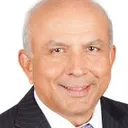
Prem Watsa

Master Profile

Prem Watsa: Investment Profile & 13F Holdings

Fairfax Financial Holdings

Prem Watsa's investment career, philosophy, and public 13F holdings through Fairfax Financial Holdings.

Early Life and Education

Watsa’s story is a classic immigrant journey, defined by a thirst for knowledge and unyielding resilience.\n\nGrowing Up in India: Born in 1950 in Hyderabad, India, to a family of teachers, he excelled academically from a young age. He gained admission to the prestigious Indian Institute of Technology Madras (IIT Madras) and earned a degree in chemical engineering in 1971.\n\nVenturing to Canada: After college, influenced by his brother, he decided to pursue further studies in Canada. Reports say he arrived with just $8 in his pocket (some versions mention 800 rupees worth very little foreign exchange). To finance his tuition, he went door-to-door selling air conditioners and furnaces.\n\nBusiness Awakening: He enrolled in the MBA program at the University of Western Ontario (now the Ivey Business School). It was there that he encountered Benjamin Graham’s Security Analysis, which completely transformed his worldview, turning him from an engineer into a devout value investor.

Investment Career

Watsa’s career demonstrates how to harness an insurer’s “float” for compounding growth, following a path strikingly similar to Buffett’s.\n\nEarly Days and Startup (1974–1985): After graduation, he joined Confederation Life as an analyst, quickly distinguishing himself through his adept application of Graham’s principles. In 1984, together with his former boss, he co-founded Hamblin Watsa Investment Counsel, which still manages Fairfax’s investment portfolio today.\n\nFounding Fairfax (1985): In 1985, Watsa took over Markel Financial, a nearly bankrupt trucking insurance company. He modeled it after Berkshire Hathaway, restructuring it and renaming it Fairfax — from “Fair, Friendly, Acquisitions.” Through a series of acquisitions (Odyssey Re, Crum & Forster, and others), he built a vast insurance empire, using the low-cost float generated by the insurance operations to invest in stocks and bonds.\n\nCrowning Achievement (2008): Watsa’s most famous move was anticipating the 2008 financial crisis. As early as 2005–2006, he detected a bubble in the U.S. housing market. Contrary to the prevailing optimism, he directed Fairfax to buy large amounts of credit default swaps (CDS) to short U.S. mortgage-linked assets. When the crisis erupted, this contrarian bet delivered billions of dollars in profits, protecting the company’s net worth and giving him ample cash to buy at the market bottom.\n\nGuardian of BlackBerry: He was the largest shareholder of BlackBerry, once the dominant smartphone maker. During BlackBerry’s darkest days, instead of selling, he joined the board and led its transformation, successfully turning it from a hardware company into a cybersecurity software company.

Investment Philosophy

Prem Watsa is one of the most faithful disciples of Graham and Buffett, yet he adds a distinctive “macro hedging” twist.\n\nDeep Value and Margin of Safety: He strictly follows the principle of “buying a dollar for fifty cents.” He hunts for businesses that are deeply out of favor, sometimes facing temporary existential threats, provided they have strong balance sheets.\n\nMacro Hedging: This is his biggest departure from Buffett. Watsa pays close attention to macroeconomic risks and is willing to use derivatives (such as CPI-linked contracts and CDS) to hedge against deflation or a market collapse. He believes that to survive, one must buy insurance for the “once-in-a-century” storm.\n\nLong-Termism and Decentralization: Fairfax is run with extreme decentralization. Watsa focuses on just two things: capital allocation and CEO selection. The insurance subsidiaries enjoy full operating autonomy, while Watsa directs their cash flows to the highest-return opportunities.\n\nThe ‘Seven-Year Cycle’ Theory: He often cites the biblical story of “seven years of plenty and seven years of famine” to remind investors that markets are cyclical and one must prepare in good years for the lean ones.

Personal Life

Despite overseeing tens of billions in assets, Watsa lives with a reclusive modesty.\n\nExtremely Low-Profile: He rarely gives media interviews and for a long time didn’t even join earnings conference calls. His annual general meeting (AGM) is the only window into his world, often described as the “Woodstock of Canada.”\n\nFamily: He has been married to his wife, Nalini, for many years and has three children. His son Ben Watsa is involved in the investment world and serves on Fairfax’s board.\n\nPhilanthropy: He is a major donor and board member of the SickKids Hospital in Toronto. As a person of Indian heritage, he also actively supports education and healthcare projects in India. He has received the Order of Canada, one of the country’s highest civilian honors.

Books and Writings

Prem Watsa has never published a personal autobiography, but his more than 30 years of “letters to shareholders” are a treasure for the investment world.\n\nAnnual Shareholder Letters: Their style is reminiscent of Buffett — candid and detailed. In them, he owns up to mistakes (such as misjudging the newspaper industry early on) and elaborates on his macroeconomic views. These letters are a superb primer on macro value investing.\n\nRecommended Books: The Fairfax Way: Not written by him, this book chronicles Fairfax’s growth history and Watsa’s business philosophy. Dear Shareholder: Compiled by Lawrence Cunningham, this volume includes excerpts from Watsa’s classic letters.\n\nClassic Sayings: “Trees don’t grow to the sky.” — a warning against market bubbles. “We not only aim to make money for shareholders, we also strive to protect their capital.” “Do business fairly and friendly.” (Fair, Friendly.)