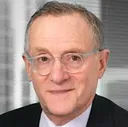
Howard Marks

Master Profile

Howard Marks: Investment Profile & 13F Holdings

Oaktree Capital Management

Howard Marks's investment career, philosophy, and public 13F holdings through Oaktree Capital Management.

Early Life and Education

Howard Marks grew up in an ordinary middle-class family; his parents had lived through the Great Depression, an upbringing that shaped his cautious, risk-conscious character. His academic background is outstanding: he earned his undergraduate degree in finance from the prestigious Wharton School of the University of Pennsylvania, and then pursued an MBA at the University of Chicago Booth School of Business. At Chicago, exposure to modern financial theories such as the efficient market hypothesis prompted him to think deeply about market inefficiencies, laying the groundwork for his later distinctive investment philosophy.

Investment Career

Marks began his career in the investment research department of Citibank, then joined TCW Group, where he delved deeply into high-yield bonds and distressed debt investing, and met the colleagues who would later co-found Oaktree with him. In 1995, Marks teamed up with Bruce Karsh and three other colleagues to co-found the hedge fund firm Oaktree Capital Management. The firm focused on alternative investment markets, with a particular expertise in distressed debt. Under his leadership, Oaktree grew from a start-up into a global asset management leader; by 2023, its assets under management (AUM) exceeded US$180 billion. Marks is particularly celebrated for his prescient judgment at major market turning points. In January 2000, he published a memo titled bubble.com, correctly forecasting the bursting of the tech stock bubble. During the 2008 global financial crisis, when the market was gripped by extreme panic, Oaktree, armed with ample “dry powder” (cash), aggressively bought severely undervalued assets and subsequently reaped huge returns as the market recovered.

Investment Philosophy

Howard Marks’s investment philosophy is highly distinctive, centered on “second-level thinking” and a deep understanding of market cycles. Second-level thinking: He believes successful investing requires going beyond the market’s conventional consensus (first-level thinking) and engaging in deeper, more complex analysis. For instance, when a company reports strong results, first-level thinking would say, “This is a good company, buy it”; second-level thinking asks: “Are market expectations already too high? Has the current price fully reflected—or even over-reflected—the good news?” The pendulum theory: He likens the investment market to a pendulum that constantly swings between extremes of optimism and pessimism, greed and fear, rarely resting at the rational midpoint. Successful investors recognize where the pendulum sits and adopt a contrarian approach. Risk control at the core: He firmly believes the essence of investing is not aiming for high returns but avoiding permanent loss of capital. He draws a strict distinction between price “volatility” and the “risk of permanent capital loss,” and manages risk through thorough fundamental analysis, insistence on a margin of safety (buying at a price meaningfully below intrinsic value), and rigorous due diligence. Understanding cycles: He advocates that investors strive to determine where the market stands in the cycle so they can adjust their strategies accordingly. In his view, the greatest risk often arises when people widely believe there is no risk.

Personal Life

Outside of work, Howard Marks is actively engaged in cultural and philanthropic pursuits. He serves as a trustee and chair of the investment committee of The Metropolitan Museum of Art in New York, and is also a member of the investment committee of the Royal Academy of Arts in London, reflecting his sustained commitment to the arts. He also keeps a close eye on global markets and has visited China on multiple occasions. In November 2023, for example, he traveled to Beijing to meet with investors and expressed confidence in China’s long-term economic prospects. In November 2024, he made another trip to China and met with Yin Yong, the Mayor of Beijing.

Books and Writings

Howard Marks has widely disseminated his investment thinking through his memos and books. Investment memos: Since 1990, he has regularly written and distributed memos to clients, offering keen insights on markets, the economy, and investment psychology. These memos are famed for their depth and foresight—Warren Buffett has said, “When I see memos from Howard Marks in my mail, they’re the first thing I open and read.” The Most Important Thing: This book systematically distills his investment philosophy, detailing core concepts such as second-level thinking, market cycles, and risk control. It has become a modern classic and essential reading in the value investing canon. Mastering the Market Cycle: In this book, he explores the nature of a wide range of economic and market cycles, and guides investors in recognizing where we stand in the cycle so they can improve their decision-making.