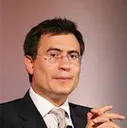
Chris Hohn

Master Profile

Chris Hohn: Investment Profile & 13F Holdings

TCI Fund Management

Chris Hohn's investment career, philosophy, and public 13F holdings through TCI Fund Management.

Early Life and Education

Hohn was born into an immigrant family. His father was a Jamaican auto mechanic and his mother a British legal secretary, and they lived in modest circumstances. This upbringing accustomed him to making choices with limited resources and nurtured an independent-minded, "outsider" perspective. Hohn attended the University of Southampton in the 1980s, earning a First‑Class Honours degree in Accounting and Business Economics. He then went to the United States and obtained an MBA from Harvard Business School.

Investment Career

Hohn’s investment career began in consulting and private equity before he joined Richard Perry’s hedge fund Perry Capital in 1996. In 2003 he founded his own hedge fund, TCI Fund Management. Early brilliance and severe setback: In its early years TCI pursued an aggressive shareholder activism strategy, targeting good companies with underperforming management and forcing boardroom change through hard‑nosed tactics to generate short‑term excess returns. In the first four years the fund’s annualized return reached around 40% and assets under management swelled rapidly. However, the 2008 financial crisis delivered a harsh lesson: TCI lost 43% during the crisis and key team members gradually departed. Transformation and maturity: The setback prompted deep soul‑searching and a fundamental shift in Hohn’s investment style. He moved from being an aggressive investor focused on short‑term arbitrage to a long‑term value investor who concentrates on finding high‑quality companies with wide "economic moats" and holding them for the long run. As of 2024, TCI manages over $60 billion in assets; over the past decade or so it has sustained annualized returns well above 15%, and in 2023 it was one of the world’s most profitable hedge funds.

Investment Philosophy

At its core, Hohn’s investment philosophy is long‑term value investing, a conviction that has deepened through practice. It can be broken down into several dimensions: Focus on economic moats: Hohn believes that what makes a great investment is not growth or innovation per se, but whether a business possesses a sustainable competitive advantage—an "economic moat." He particularly values companies that have "postponable but not cancellable demand." He estimates that globally only about 200 companies meet his high‑quality investable criteria. High concentration and long holding periods: TCI’s portfolio is highly concentrated; the top five holdings (such as General Electric, Moody’s, Microsoft, Visa) can account for nearly 72% of the portfolio. The fund’s average holding period for an investment is eight years, far longer than the average holding period of under one year for U.S. institutional investors. Hohn considers long‑termism "the most overlooked free lunch" in financial markets. Strict exclusion mechanism: After painful lessons, Hohn established a rigorous "Exclusion List." He explicitly avoids investing in what he views as structurally flawed "inferior industries," such as banks, autos, airlines, traditional retail, and commodities. Valuation and intuition: On valuation, Hohn focuses more on a company’s long‑term intrinsic value than on short‑term valuation swings. He also acknowledges a role for intuition in investment decisions, regarding it as a higher‑order form of wisdom grounded in experience and pattern recognition.

Personal Life

Wealth and philanthropy: Hohn is known for his immense wealth and generous charitable giving. He created a unique mechanism through which 0.5% of management fees and 0.5% of performance fees are automatically donated, channeling significant personal income into his namesake foundation, The Children’s Investment Fund Foundation (CIFF). The foundation focuses on improving the health and education of children in developing countries and on tackling climate change. His cumulative personal donations have exceeded $10 billion. Personal experience: In 2014 Hohn divorced his wife, paying a settlement of $530 million, a sum that earned him the label "Britain’s most expensive divorcé."

Books and Writings

Chris Hohn has not published a systematic investment book. He is low‑key and rarely gives interviews. The essence of his investment thinking can be found primarily in his annual letters to investors and in rare public conversations. For example, he recently appeared on the podcast "In Good Company" from Norges Bank Investment Management, where he unusually shared a structured account of how his investment thinking has evolved over the past two decades. In these discussions he not only talks about investing but increasingly touches on "inner order" and the meaning of life. He believes that genuine change comes from inner awareness and that the secret of life lies in "who you become," not in how much you achieve.