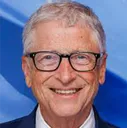
Early Life and Education
Bill Gates (full name William Henry Gates III) was born on October 28, 1955, in Seattle, Washington. He grew up in a well-educated family; his father was a prominent lawyer, and his mother served on the board of directors for a banking system and held leadership roles at various institutions.
Gates's computer aptitude became apparent while attending Lakeside School. In 1968, he encountered a PDP-10 computer at the school and quickly immersed himself in programming with his friend Paul Allen. They even earned valuable computer time by finding software bugs for Computer Center Corporation. During school, he also wrote a class-scheduling program.
In 1973, Gates entered Harvard University as a pre-law student with high scores (SAT 1590 out of 1600). However, his passion for computers far outweighed his interest in law. In January 1975, after reading an article in Popular Electronics about the MITS Altair 8800 microcomputer, he and Allen keenly sensed an opportunity and successfully developed a BASIC interpreter for the machine. This success ultimately led Gates to drop out of Harvard and, together with Paul Allen, devote himself to their new venture—Microsoft.
Investment Career
Gates's investment career can be clearly divided into two main phases: the founding and growth of Microsoft, and the diversified asset allocation through his family office.
The Microsoft Era: From the company's founding in 1975 until he stepped down as CEO in 2000, Gates's core wealth came from Microsoft's enormous success. By licensing MS-DOS to IBM and later launching the revolutionary Windows operating system, he not only helped drive the personal computer's widespread adoption but also built a vast software empire. Under his leadership, Microsoft went public in 1986, making Gates one of the youngest billionaires in America.
Cascade Investment and Diversification: To avoid over-concentration in Microsoft stock, Gates established his family office, Cascade Investment, in 1994 and hired Michael Larson to manage it professionally. Cascade's core strategy is to steadily reduce its Microsoft holdings and allocate capital across a variety of asset classes, including substantial holdings in U.S. short-term Treasury bonds and corporate bonds, non-technology stocks, private equity, and real assets. This allocation effectively hedges against the cyclical risks of the tech sector. Additionally, Gates is adept at counter-cyclical investments, such as acquiring a controlling stake in Four Seasons Hotels during the pandemic in 2021. Through Breakthrough Energy Ventures, he also focuses on investing in future-oriented technological innovation, particularly in clean energy.
Investment Philosophy
Gates's investment philosophy deeply reflects his strategic foresight and a unique understanding of wealth's purpose. Its core points can be summarized as follows:
Value Investing and Long-Term Thinking: Gates's investments never chase short-term market fluctuations. Instead, they are anchored to long-term, global trends such as climate change, food security, and clean energy. He deploys "patient capital," waiting for the value of the technologies he backs to gradually materialize as these trends become established.
Risk Diversification and Broad Allocation: He fully understands the importance of not putting all your eggs in one basket. Through Cascade Investment, his wealth is systematically allocated across various uncorrelated categories—bonds, stocks, private equity, and real assets (such as extensive farmland, making him the largest private farmland owner in the U.S.)—to build a balanced portfolio that withstands market risks.
Leveraging Professional Talent: Gates is acutely aware of his own knowledge boundaries. Early on, he hired financial experts to help manage wealth that far exceeded what one person could prudently handle. He delegates the day-to-day operations of Cascade Investment entirely to professional managers while focusing on strategic direction. This division of labor is a vital institutional safeguard that has enabled his wealth to grow over the long term.
Personal Life
Family and Marriage: Gates married Melinda French in 1994, and they have three children. In 2021, the couple announced their divorce.
Philanthropy: In 2000, Gates merged two existing foundations and, together with Melinda, established the Bill & Melinda Gates Foundation (now known as the Gates Foundation). The foundation works to reduce inequity in health and development around the world, with major commitments to global public health, poverty alleviation, disaster relief, and education. Warren Buffett's substantial donations significantly expanded the foundation's resources. In May 2025, Gates announced that he would give away nearly all of his personal wealth within 20 years and plans for the foundation to close by the end of 2045. He also co-founded The Giving Pledge with Buffett, encouraging billionaires globally to commit the majority of their wealth to philanthropy.
Views on Wealth: Gates upholds the principle of "making every dollar count," emphasizing the value of money rather than splurging.
Books and Writings
Bill Gates shares his insights on future technology and social development through his writing. His books are not only bestsellers but have also sparked widespread discussion.
The Road Ahead: Published in 1995, this book predicted the emergence of the information superhighway and the profound changes the internet would bring to daily life.
Business @ the Speed of Thought: Here, he emphasizes the potential of digital tools to solve business and societal problems.
Additionally, he regularly publishes articles on his personal blog, Gates Notes, sharing his views on climate change, public health, energy innovation, and other areas.